
Picture of Written by Christoffer Andreasson

Written by Christoffer Andreasson

Head of Content at Promote

A good platform choice starts with the journey you want participants to take. Once that journey is clear, the questions to ask a vendor follow naturally.

The High Performance Learning Journey (HPLJ) methodology is a helpful guide. It describes what a program needs in order to turn learning into performance, and each of those needs becomes a practical question for a platform.

The strongest questions for a platform vendor come from the journey you plan to run, so define the journey first and let the platform follow.

This article offers six questions you can bring to your next demo as a one-page checklist. The whole path looks like this:

  • Define the journey
  • Ask six questions
  • Run a pilot
  • Decide

The journey comes first, and the platform supports it

A platform supports a journey. Learning journeys can perform well without one, but a platform adds ease, scale, and visibility to a design that already works.

That is good news for anyone buying. You can prepare before the first demo, and the preparation takes about a page. Write down the business goal, the few situations where people need to perform differently (the methodology calls them Moments-that-Matter), and the length of time the program needs.

This one-page plan is what the methodology calls a Program Performance Path. Keep it next to you in every demo. It turns a feature tour into a conversation about your program.

Question 1: Can it support a program that runs over weeks?

In the HPLJ methodology, learning is a process. What happens before and after a session has more influence on application than the session itself.

Ask the vendor to show you a program that unfolds over time:

  • Can you schedule assignments between live sessions?

  • Can participants work through the knowledge foundation online, so that live time goes to practice?

  • Can pacing follow the real workload of the participants?

A good answer shows a calendar of small, clear steps that participants can fit around their work. You should be able to see how a participant moves from learning, to trying, to applying.

Listen for how the vendor handles the end of the program as well. Participants benefit from a way to keep sharing experience and good practice once the final module is done, such as a few check-in sessions that extend the journey into daily work.

Question 2: What do managers see, and what can they do?

Participants make more impactful use of their learning when their direct manager is engaged. Therefore, a manager should be treated as part of the journey.

Ask what a manager sees on the platform:

  • Can they follow their team's progress at a glance?

  • Can they review and approve assignments, and respond to a participant's plan for applying the skill?

  • How many minutes does that take in a normal week?

  • Example: A manager opens the platform before a weekly one-on-one, sees that a participant has just completed an assignment on a coaching conversation, and uses the meeting to ask how it went. The platform made the manager's few minutes count.

Question 3: How do participants practice and learn from each other?

A journey needs real application, with feedback along the way. The best way to achieve this is through guided social learning, where participants share successes and challenges and learn from one another.

Ask the vendor to walk you through one assignment from start to finish:

  • Can a participant try something in real work, reflect on it and share the result?

  • Who responds? Can facilitators, coaches and peers give feedback easily?

  • Does that still work when participants are in different locations?

A good answer shows a clear loop, from trying, to reflecting, to getting a response.

Listen for how quick the smallest response is. Feedback does not have to be elaborate. In one program described in the methodology, engagement dipped after an initial spike, and a simple acknowledgment that a participant had completed an assignment went a long way. A platform that makes small acknowledgments quick to give supports momentum.

Question 4: What will a stakeholder be able to see in week three?

A journey gives you time to act on what you learn along the way. When participants stop applying their learning, the cause is often something in the way, such as time, resources, or opportunity.

Ask the vendor to show you what a stakeholder sees while the journey is running:

  • Can you see progress for individuals and for the group?

  • Are there signals about who may need help?

  • Can you see evidence of application, such as participant actions and manager actions, beyond completion?

A good answer lets you find obstacles while there is still time to remove them.

Listen for how that record is built. When the platform keeps an automatically updated record of assignments and actions, many measurement tasks become much easier. A clear record of who is doing what also brings senior leaders into the picture.

Question 5: How does it change the work of the people who run the program?

Teams usually hope a platform will save effort in a few specific places. A platform can reduce the number of staff needed to guide participants through a journey, but no technology today reduces that number to zero.

Ask the vendor to walk you through the program you described:

  • How does it change the way you manage learning resources?

  • How does it handle communications to participants and managers?

  • How does it help you track participants and offer timely coaching?

A good answer is specific about where effort goes down, and just as clear about where facilitators, coaches and managers stay at the center.

Listen for whether the vendor describes their platform as supporting people or as replacing them. The first fits a journey. It also fits the way busy L&D teams actually work.

Question 6: How will it work alongside our LMS?

Your LMS has a clear job. It is the system of record for enrollment, content, and completion, and it does that job reliably. A learning journey platform is a system of action. It supports what happens between and after sessions, and it records that too. The two complement each other.

Ask the vendor to explain how the two systems divide the work:

  • What will each system hold?

  • What needs to be shared between them?

  • How do teams typically start, and what does the first month look like?

A good answer is specific about who does what in the first weeks: who sets up the program, who invites managers, and who answers participants’ questions.

Listen for a starting point that keeps the records you already rely on where they are and adds the journey layer for programs where application matters. Clear roles at the start make the first journey easier to run and easier to learn from.

Try it on one program before you decide

The methodology suggests a practical route. Pick one strategically important program, use a learning journey platform as a pilot, and write a short business plan for trying it out. Present the plan to your L&D leadership.

A pilot lets you test the six questions with real participants and real managers. It also gives you evidence from your own organization, which is the most useful kind to bring into a decision.

Take the one-page Program Performance Path, the six questions, and one program with a clear business goal. That is enough to compare platforms with confidence.

Which of the six questions would matter most for your next program, and what answer would you want to hear?

Congrats, Almost there!

A few things to consider before trying the platform:

And to make it as easy as possible...

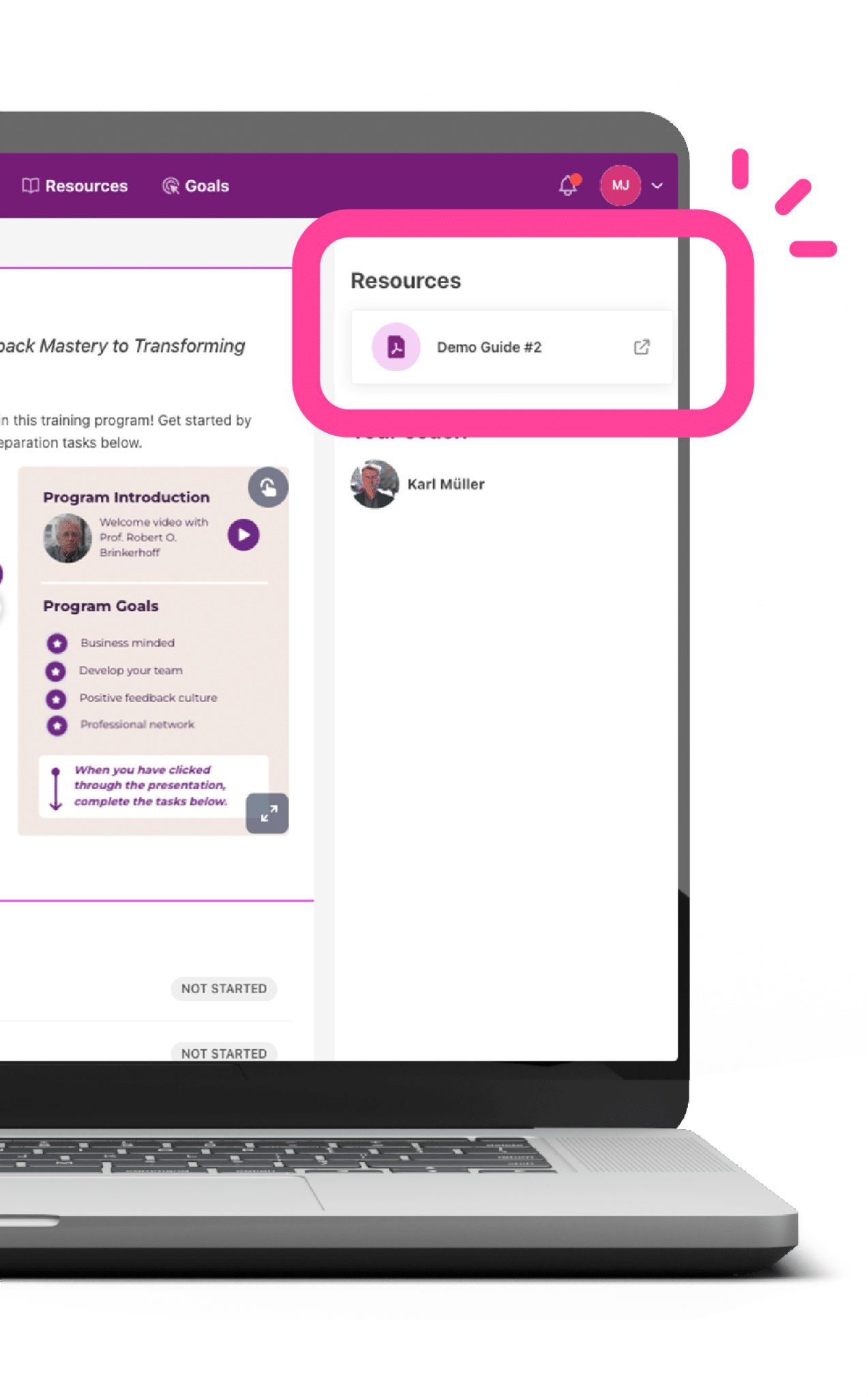
…there’s a Demo guide within each module, explaining all the nifty features of the Promote Platform! You can find it under resources on the right hand side of the screen.