
Picture of Written by Christoffer Andreasson

Written by Christoffer Andreasson

Head of Content at Promote

When a program has a clear answer to "where will people use this?", everything else in the design gets easier. Content gets focused, managers know what to look for, and participants know what they are practicing for.

The High Performance Learning Journey (HPLJ) methodology, has a name for those situations: Moments-that-Matter. They are the high-leverage parts of a job where a new skill, used well, produces a result the business values.

Choosing a small number of Moments-that-Matter, together with the business and managers, gives a program a clear target and gives every participant a reason to apply what they learn.

A Moment-that-Matter is a high-leverage part of the job

Any job has many parts. A salesperson prospects, maintains relationships, prepares presentations and researches competitors. These parts do not carry equal weight, and their weight shifts with the market.

Impact happens when a well-learned skill meets a high-leverage part of the job and produces a valuable result. Using a skill in just any part of the job is less valuable. The participants who create the most impact are the ones who apply their learning where it counts most for the organization.

Importantly, lower-leverage parts of a job still have a place: they make good settings for early practice and feedback. So the choice is about where to aim, and the rest of the job remains useful for building confidence.

Start the conversation with the business goal

It is tempting to open a planning conversation with a blank template. We suggest a gentler start: have a conversation. Ask open questions about the stakeholder's ambitions, goals and priorities, and stay curious about what is going on in their world.

The reasoning is practical. Early in the conversation, stakeholders tend to talk about the business goal or the result they want. They may not use the language of learning outcomes, and they do not need to. Their view gives you the right-hand side of the picture first.

  • Business goal
  • Result people need to produce
  • Situation where they produce it
  • Skill needed

Reading from left to right, this is the line of sight from the business to the skill. The Program Performance Path, a one-page map in the methodology, captures exactly this chain.

Two questions steer the conversation to the right place

The book offers a simple technique for guiding a stakeholder conversation. Picture a steering wheel with two directions.

  • To move toward the business purpose ask:

    "Why is that important?" or "Why does that matter?"

  • To move toward the situations and skills ask:

    "What's causing that?" or "What would people need to do differently to achieve that goal?"

We can illustrate this with a conversation. A business stakeholder says that customer service staff need to learn to listen to customers. One question about why that matters reveals that recorded calls show staff missing buying signals, and that better follow-up would increase add-on sales as part of a growth strategy.

In that single exchange, a listening-skills request turned into a named situation (recognizing and following up on buying signals) and a named result (more add-on sales).

Summarizing what you heard before the next question helps too. It confirms your understanding and gives the stakeholder a chance to add detail.

Managers and participants know where the skill gets used

The senior sponsor usually has a strong view of the business goal. The people closest to the work often know the situations best.

  • Senior executives tend to know the business rationale.
  • Business unit leaders add the performance outcomes.
  • Supervisors can describe the moments in daily work where performance counts.
  • The participants themselves contribute to the learning outcomes.

A short working session with a handful of managers can be a good way to gather this. Here is a hypothetical example of how it could go: ask each manager to name the two or three situations in a typical month where better performance from their team would make the biggest visible difference. Group the answers, and the situations that appear repeatedly are good candidates.

Each situation is written as an action in a scenario

A situation is easiest to use when it is written as a clear action in a specific scenario. The formula is: action verb + behavior + scenario (who, where, when, how).

For a leadership program, an example can be: "Uses the GROW model in development conversations with team members." It names the behavior and the setting, so anyone reading it can picture what applying the skill looks like.

A few checks help when you review your list:

  • Could a manager spot this situation happening in the next two weeks?

  • Does it lead to a result that matters to the business?

  • Is it specific enough to practice, first in a safe setting and then in real work?

Using the language of your stakeholders helps as well. If they talk about KPIs rather than performance outcomes, use KPIs.

The Moments-that-Matter steer the content

Once the situations are agreed, the content questions become easier. Imagine a program team that mapped the Moments-that-Matter and then returned to its existing content with a new question: "Do the participants really need to learn this in order to be able to perform well in this scenario?"

The clarity about the key scenarios led to a more streamlined program.

The same logic works for a new design. Start with where the skill will be used, and then include what participants need to perform well there. Skills and knowledge that do not connect to any chosen situation are good candidates to leave out or offer as optional material.

The situations also shape practice. Study each Moment-that-Matter and design a Crawl-Walk-Run path for it, with no huge leaps in challenge from one attempt to the next.

The list can change as work changes

Moments-that-Matter are not fixed. The book notes that the high-leverage parts of a job shift as strategy and goals shift, and that participants differ in their strengths and context.

That is why the program-level list is a starting point. Each participant can refine it into their own path with their manager.

For example, a project manager asks subcontractors for feedback and discovers a new situation worth focusing on: building trust in everyday interactions. Her path is updated and she receives additional modules. If many colleagues receive the same feedback, the new situation can move into the program-level list.

One question to take to your next planning meeting

For your next program, ask your stakeholders: in which three situations would better performance make the biggest difference to the business, and who will be there to help people practice them?

If the answers come quickly and match, the program has a strong target. If they differ, you have found the most useful conversation to have before design begins.

Congrats, Almost there!

A few things to consider before trying the platform:

And to make it as easy as possible...

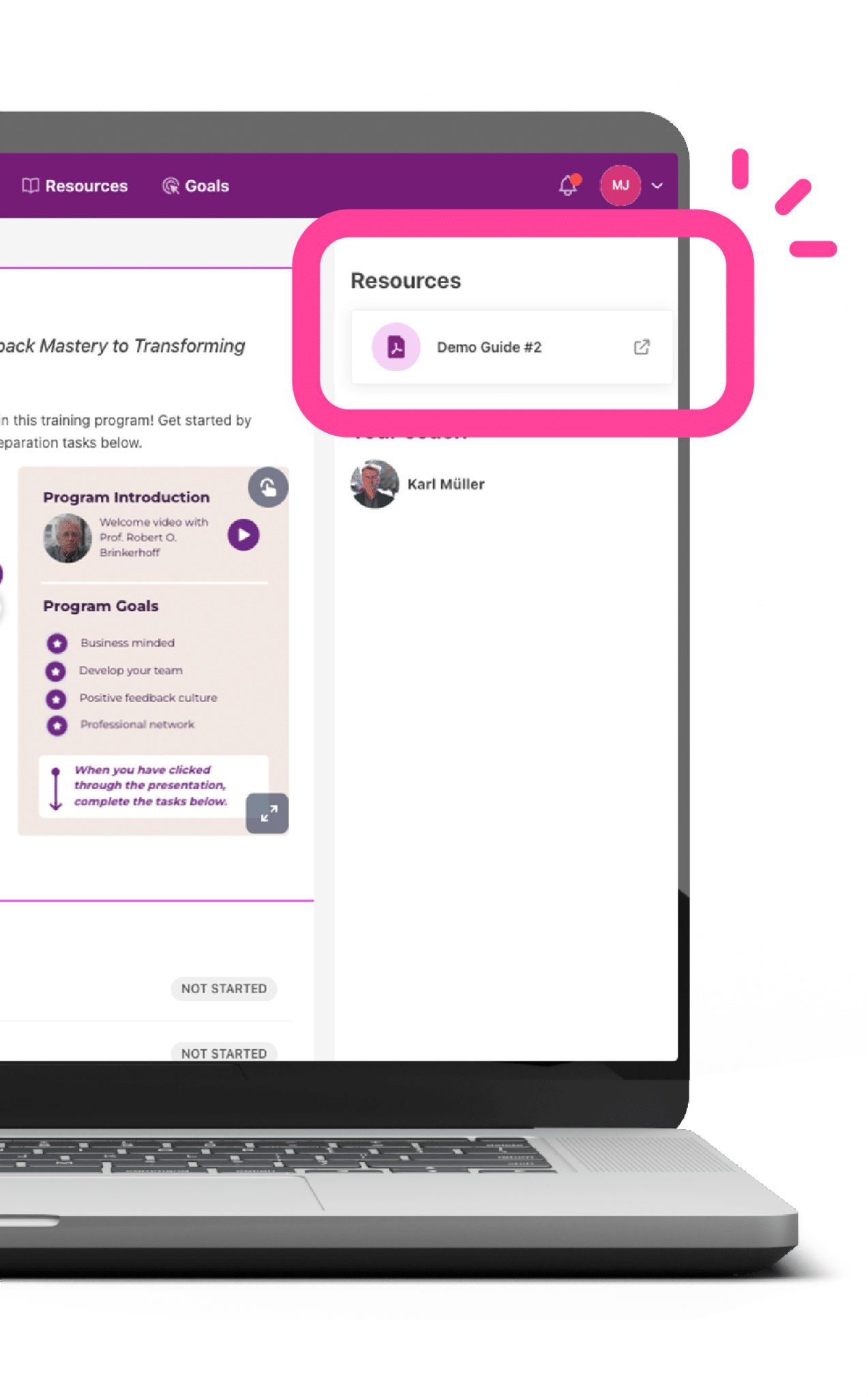
…there’s a Demo guide within each module, explaining all the nifty features of the Promote Platform! You can find it under resources on the right hand side of the screen.