


Picture of Written by Christoffer Andreasson

Written by Christoffer Andreasson

Head of Content at Promote

Managers usually don't reinforce training because L&D keeps asking for something they were never set up to give, a request that shows up late, generic, and disconnected from what the manager is actually accountable for. The fix isn't a better-worded ask; it's designing the manager's role into the program from the start, not requesting it once the program is already built.

Every L&D team has sent some version of this email: "Please remind your team to complete the module by Friday," or "Take 15 minutes this week to talk through what they learned." And every L&D team has watched that email land, get skimmed, and quietly go nowhere.

The easy conclusion is that managers don't care enough about development. The more useful conclusion is that L&D keeps asking for something managers were never set up to give.

Why Don't L&D's Requests to Managers Work?

Most requests for manager involvement arrive late, generic, and disconnected from what the manager is actually responsible for that quarter, so even a manager who values development has no natural way to act on them.

Think about how most manager involvement gets requested. A program is designed, built, and scheduled. Somewhere near the end of that process, someone adds a slide, an email template, or a "manager's guide" that asks managers to reinforce what their team just learned. The ask shows up late, it shows up generic, and it shows up disconnected from anything the manager is actually responsible for that quarter.

None of that is a reflection of whether managers value learning. It's a reflection of how the request was designed, or rather, how it wasn't.

Three things tend to be true at once, and together they explain most of the gap:

  • Managers were rarely taught to do what's being asked of them.

    Most people become managers because they were good at the job before it, not because someone trained them to coach, reinforce, or have a structured development conversation. Asking a manager to "reinforce the training" assumes a skill that promotion doesn't automatically confer. It's a reasonable ask in theory and an unreasonable one in practice, unless the manager has actually been shown how.

  • The ask isn't tied to anything the manager is measured on.

    A manager's own goals for the quarter rarely include "helped my team apply what they learned in the workshop." Their real job and L&D's request run on separate tracks, and when two things compete for the same hour, the one that shows up in a performance review wins every time. That's not a character flaw, it's just how priorities work under pressure.

  • The ask arrives after the program is already built.

    By the time a manager is looped in, the content, the timeline, and the format are locked. Their role has been reduced to "please help this land" rather than "help us decide what this should be." Being handed enforcement duty after the fact feels very different from being treated as a partner in the design, and managers respond to that difference, even if they can't always name it.

What Happens When the Ask Keeps Failing?

When manager involvement keeps falling flat, both sides quietly lower their expectations of each other, L&D starts working around managers instead of through them, and managers start skimming L&D's requests instead of acting on them, which makes every future ask easier to ignore.

When the ask keeps failing, both sides quietly adjust their expectations, and not for the better. L&D starts assuming managers can't be relied on and works around them instead of through them. Managers start treating L&D's requests as one more email to skim rather than act on. Neither side is wrong about what they're observing, they're just both responding rationally to a broken exchange, and every repetition makes the next ask a little easier to ignore.

The real cost shows up beyond the training itself. When employees sense that their manager doesn't take development seriously, that reads as a signal about the organization as a whole, not just about one course that didn't stick.

How Should L&D Design Around Manager Time Instead of Asking for It?

Treat manager time as a constraint to design around, not a favor to request: decide the manager's role before the program is built, keep the ask small and repeatable, and tie it to something the manager already owns rather than to L&D's own metrics.

The shift that actually works is small to describe and harder to implement: treat manager time as a constraint to design around, not a favor to request. The same way a good program design accounts for a limited budget or a distributed workforce, it should account for the reality of how much attention a manager can realistically give, and build around that, rather than hoping for more.

In practice, that looks like three changes:

  • Decide the manager's role before the program is built, not after.

    If a manager is going to matter to whether a skill sticks, and their influence over what happens after the training is often bigger than the training itself, that has to be a design decision from day one, not an addendum once the content is finished.

  • Make the ask small, specific, and repeatable.

    "Reinforce the training" isn't something a busy manager can act on. "Ask your team this one question in your next one-on-one" is. A request that fits inside a manager's existing rhythm gets followed. A request that requires building a new habit from scratch usually doesn't.

  • Connect the ask to something the manager already owns.

    A request framed as "help us hit our completion numbers" is competing with the manager's real job. A request framed as "this is the exact skill gap that's been slowing your team down" isn't, because it's already their problem, and you're just handing them a way to solve it.

Seen this way, the manager-involvement gap isn't a motivation problem. It's a performance barrier, something standing between a learning intervention and the behavior it's supposed to produce, and it deserves to be identified and managed like any other barrier, not wished away with a better-worded email. It's the same reasoning behind starting a learning journey by naming an invested stakeholder before the program begins, rather than hoping for manager buy-in after the fact.

Managers were never the obstacle. The ask was.

  • Blog

    Insight type

  • Method

    Category

  • Manager Involvement

    Topic

  • Table of contents

  • Why don't L&D's requests to managers work?

  • What happens when the ask keeps failing?

  • How should L&D design around manager time instead of asking for It?

Congrats, Almost there!

A few things to consider before trying the platform:

And to make it as easy as possible...

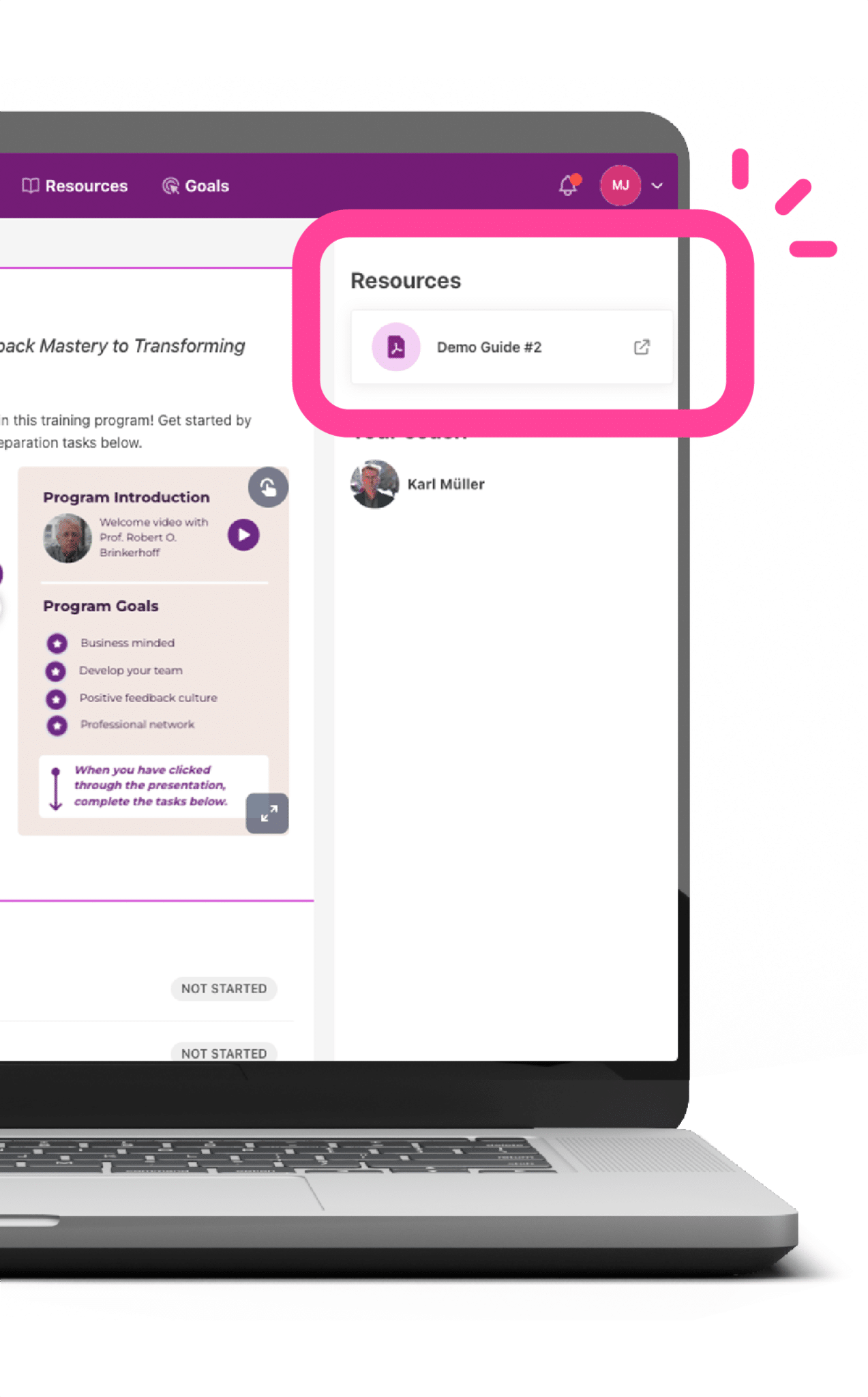
…there’s a Demo guide within each module, explaining all the nifty features of the Promote Platform! You can find it under resources on the right hand side of the screen.